

Your payroll system works fine. That’s not where the money is being lost.
Walk into most Kenyan companies with 100 to 800 staff, and you find the same picture. Payroll runs properly—Workpay, Sage, AREN, M-Kazini, PaySpace, or an outsourced bureau handles it monthly. PAYE, NSSF, SHIF, and the Housing Levy are handled. Payslips go out on time.
Then look one step further, at what happens after payroll runs.
Someone opens the payroll summary and enters a journal in the accounting system. Gross pay. PAYE. NSSF. SHIF. Housing Levy. Five lines, once a month, keyed by hand.
That journal has no departments. No branches. No projects, no client contracts, no donor codes.
Which means the largest cost in the business — usually 30 to 60% of everything you spend — is the only cost that arrives in your accounts uncoded. Every invoice for fuel, packaging, or rent gets a cost centre. Salaries get a lump.
The consequences are quiet and expensive. A security firm can’t say which client contracts are actually profitable. A flower farm can’t cost a crop cycle. An NGO allocates staff time across donors on a spreadsheet the auditor then has to take on trust. And when the MD asks what the Mombasa branch costs to run, the honest answer is an estimate.
Meanwhile leave balances sit in a workbook on one laptop, and contracts sit in a shared-drive folder organised by whoever filed them last.
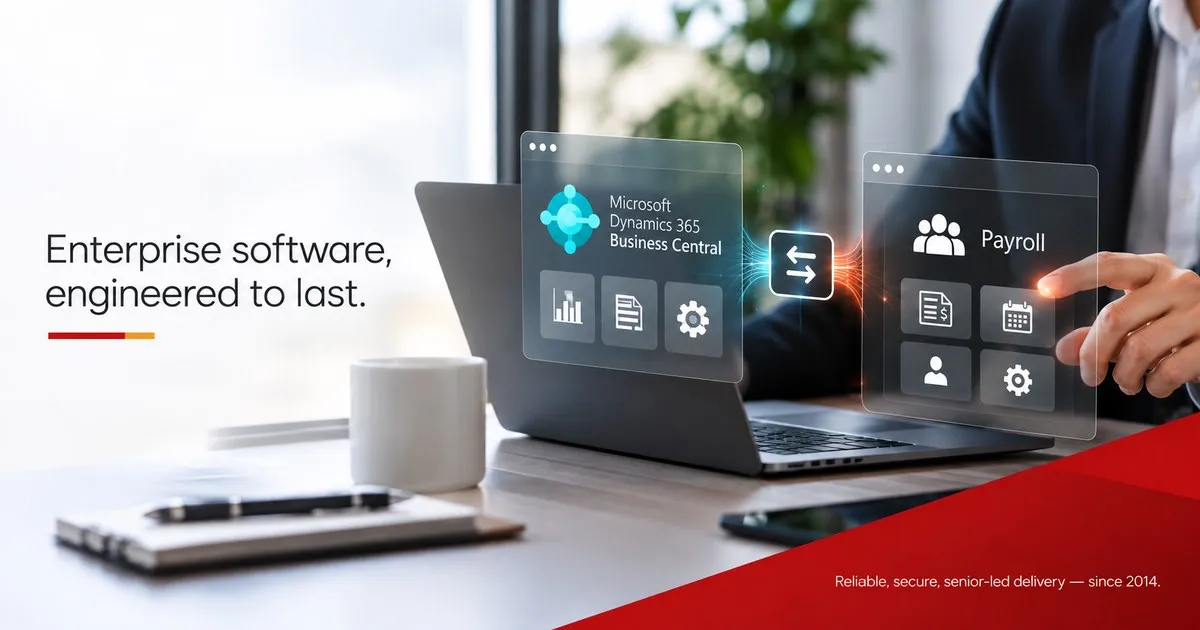
Here’s where most ERP conversations go wrong. Business Central does not do payroll. It holds the employee record, contracts, leave and absence in Essentials. It does not produce a payslip, and it does not know what SHIF is. Any partner who tells you otherwise hasn’t read the licence.
So the fix isn’t a replacement. It’s a bridge:
- Your payroll system — stays exactly where it is. Payslips, statutory deductions, returns.
- Business Central — the employee record, contracts, leave, and payroll cost posted to the ledger split by department, branch, project, or donor.
- Between them — one integration that posts automatically every payroll run.
Two to five days on the HR side, and the integration is scoped in the same week. Nobody changes payroll provider, nobody retrains, and the monthly typing stops.
You don’t need this yet if you outsource payroll and the journal arrives clean, coded, and on time every month. That’s a working arrangement — don’t break it.
Action point. If payroll reaches your ledger as a typed journal, that’s a 20-minute conversation, and we’ll tell you honestly whether it’s worth fixing. Email info@trendpro.co.ke or call +254 723 343 353. We’ll map where your HR data lives, where payroll lives, and what the bridge between them would take.
First of 40. One Business Central module every Monday — what it does, when you need it, and when you honestly don’t.